

Hi there! How can we help you today?
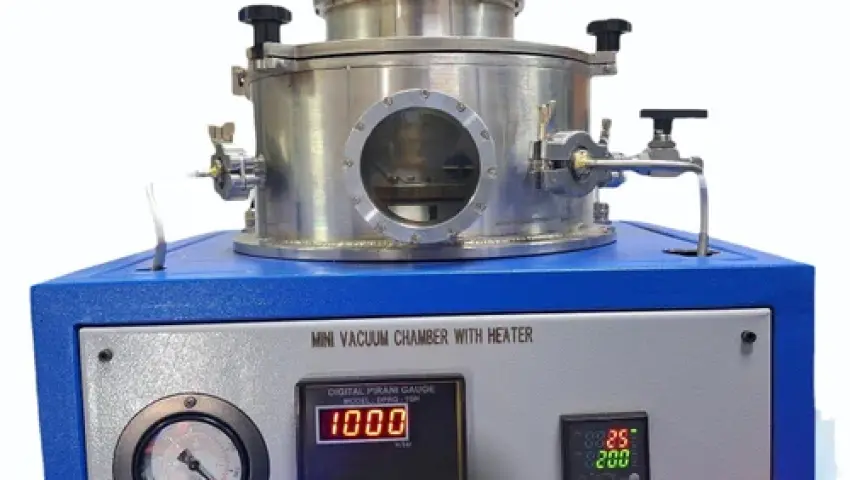
Vacuum Chamber Design (HV / UHV / Custom Geometry)
Design and engineering of high vacuum (HV), ultra-high vacuum (UHV), and custom geometry vacuum chambers tailored for research, material processing, and advanced engineering applications.
Virospuk provides vacuum chamber design services for applications requiring controlled low-pressure environments. Vacuum chambers form the core of systems used in thin film deposition, plasma processing, surface science, and experimental research. The design of the chamber directly influences system performance, achievable pressure levels, process stability, and overall reliability.
Different applications demand different vacuum regimes, ranging from high vacuum (HV) to ultra-high vacuum (UHV), each with specific design constraints. In addition, many experimental and industrial setups require non-standard geometries to accommodate unique processes, instrumentation, or integration requirements. This service focuses on delivering application-specific vacuum chamber designs that meet both functional and operational needs.
Scope of Work
The service covers the complete design process, from requirement analysis to detailed engineering and fabrication support.
Requirement Analysis
The process begins with a thorough understanding of the application. This includes:
- Required vacuum level (HV or UHV)
- Chamber volume and geometry constraints
- Type of process (plasma, deposition, testing, etc.)
- Number and type of ports required for instrumentation and access
- Thermal, mechanical, and environmental considerations
This stage ensures that the chamber design is aligned with system objectives.
Vacuum Level Considerations
The design approach varies significantly depending on the required vacuum regime.
High Vacuum (HV)
For HV applications, the design focuses on:
- Efficient pump-down performance
- Proper sealing using elastomer or metal seals
- Adequate port configuration for process and instrumentation needs
Ultra-High Vacuum (UHV)
For UHV applications, additional considerations are required:
- Use of low outgassing materials such as stainless steel
- Metal sealing techniques (e.g., knife-edge flanges)
- Surface finishing to reduce contamination
- Minimization of virtual leaks and trapped volumes
These factors are critical for achieving and maintaining extremely low pressure levels.
Chamber Geometry Design
Custom geometry is often required to meet specific process or integration needs. This includes:
- Cylindrical, rectangular, or hybrid chamber designs
- Multi-port configurations for complex setups
- Internal structures for mounting components
- Accommodation for sample holders, targets, or electrodes
The geometry is designed to optimize flow, accessibility, and process efficiency.
Port and Interface Design
Vacuum chambers require multiple interfaces for operation and integration. This involves:
- Design and placement of ports for pumps, gauges, and gas inlets
- Integration of viewports for observation
- Electrical and instrumentation feedthroughs
- Provision for future expansion or modification
Port configuration is carefully planned to avoid interference and maintain system performance.
Material Selection
Material selection is critical for vacuum compatibility and structural integrity. This includes:
- Use of stainless steel for HV and UHV applications
- Consideration of thermal properties and mechanical strength
- Selection of sealing materials based on vacuum level
- Surface treatment and finishing to reduce contamination
Structural and Mechanical Design
The chamber is designed to withstand external atmospheric pressure and operational stresses. This includes:
- Structural analysis for strength and rigidity
- Design of flanges, supports, and mounting systems
- Consideration of thermal expansion and stress
- Ensuring ease of assembly and maintenance
Integration with Vacuum Systems
The chamber design is aligned with the overall vacuum system. This involves:
- Compatibility with selected pumps
- Optimization of flow paths and conductance
- Integration with valves and control systems
- Coordination with gas delivery and plasma systems
Fabrication Support
Virospuk provides support for fabrication and implementation, including:
- Preparation of detailed engineering drawings
- Specification of tolerances and surface finishes
- Coordination with fabrication vendors
- Verification of manufactured components
Testing and Validation
The designed chamber is evaluated to ensure performance and reliability. This includes:
- Leak testing and sealing verification
- Structural integrity checks
- Compatibility with system components
- Validation under operating conditions
Applications
Vacuum chamber design is essential in:
- Thin film deposition and coating systems
- Plasma processing and surface treatment
- Semiconductor and electronics research
- Vacuum testing and experimental setups
- Advanced material research
Approach
Virospuk follows a detailed engineering approach:
- Application-specific design tailored to requirements
- Consideration of vacuum physics and system integration
- Emphasis on reliability, performance, and manufacturability
- Structured documentation and implementation support
Key Outcomes
Clients benefit from:
- Vacuum chambers designed for specific applications
- Reliable achievement of required pressure levels
- Efficient integration with complete systems
- Durable and maintainable designs
- Flexibility for future modifications